Best Local Listings Management Tools in 2026: A Buyer’s Guide
Best Local Listings Management Tools in 2026: A Buyer’s Guide compares Synup, Yext, BrightLocal, Uberall, Semrush Local, and Birdeye for keeping business details accurate across search engines, maps, directories, and AI search services. Synup is our top choice for agencies that need white-label controls, bulk updates, and scalable client management. You will also learn which tools suit small businesses, enterprise brands, local SEO teams, and companies that want listings tied to reviews, rank tracking, or social publishing.
Quick Comparison
Prices and product details were checked on August 4, 2026. Plans, publisher coverage, and contract terms can change.
!
The figures come from current provider pages. Synup, Yext, BrightLocal, and Semrush publish
starting rates. Uberall and Birdeye require buyers to request or configure pricing.
Introduction: Which Local Listings Management Tool Is Best in 2026?
Synup is the best overall choice for agencies and resellers because it combines listings, review monitoring, local posting, client access, APIs, and white-label options. Yext and Uberall suit large multi-location brands. BrightLocal fits small businesses and consultants, Semrush Local works well for teams already using Semrush, and Birdeye connects listings with reputation management.
The right product depends on location count, target countries, required directories, reporting needs, and budget. A five-location dental group does not need the same setup as a franchise with 2,000 stores.
How Were These Tools Compared?
This ranking weighs publisher coverage, bulk editing, duplicate suppression, agency and enterprise controls, APIs, local SEO functions, pricing clarity, and cancellation terms.
No product wins every category. The strongest choice is the one that covers your priority publishers and fits the way your team handles changes.
1. Synup
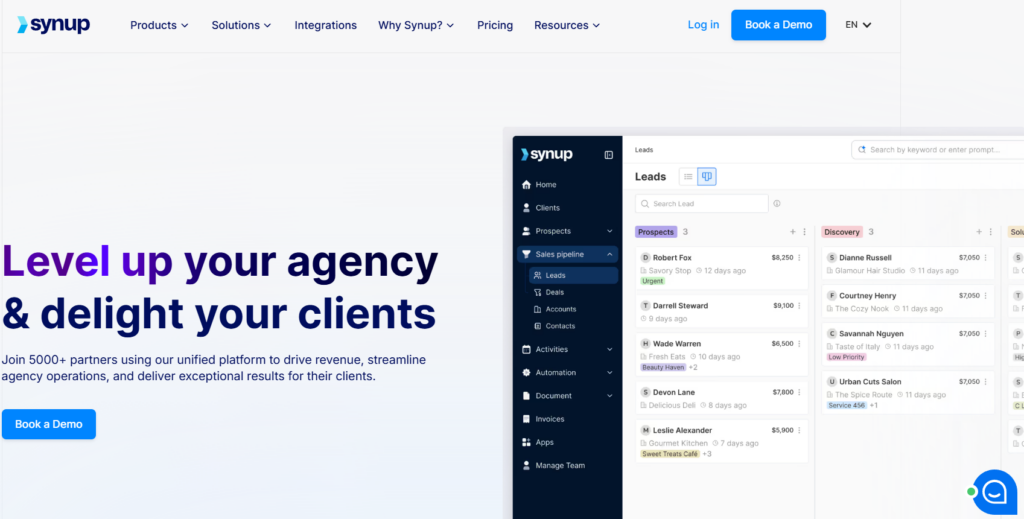
Synup is built for agencies that manage listings for many clients and want to sell the service under their own brand. Listings Pro distributes business data to more than 75 directories, supports bulk connections and edits, suppresses duplicate profiles, tracks indexation, and includes local posting and search-rank tracking. It covers Google Business Profile, Apple Business Connect, Bing, Facebook, Yellow Pages, and other major publishers.
Synup OS adds client accounts, team access, API and MCP connections, reporting, review monitoring, proposals, billing, and white-label dashboards. Published pricing starts at $79 per month when billed annually. Listings Pro costs $35 per location per month as an add-on.
Practical example: An agency with 60 restaurant clients can group locations by brand, update holiday hours in bulk, monitor sync status, and give each client a branded dashboard.
Consider before buying: The pricing structure combines a base platform with optional listing tiers. Confirm which publishers, location limits, and white-label controls are included in the proposal.
2. Yext
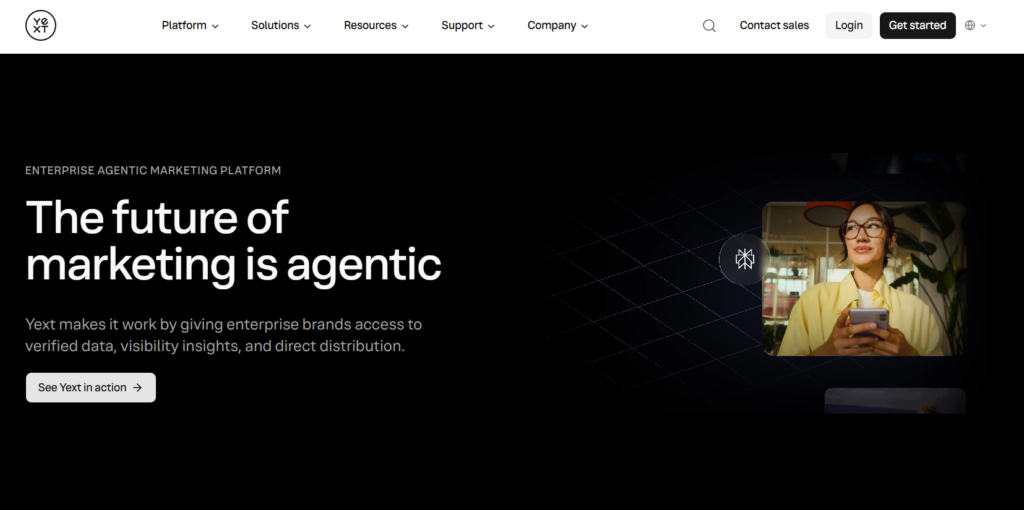
Yext suits organizations that want direct distribution to a large publisher network. Its Listings product connects with more than 200 publishers and structures location data for Google, Apple Maps, Yelp, ChatGPT, and Gemini. Yext promotes direct API connections rather than relying only on aggregators, which can make supported updates faster.
Public PowerListings plans start at $199 per year for a smaller directory set. The Essential plan costs $449 annually and includes Google, Facebook, Bing, Apple, Yelp, and Foursquare. Higher plans add expanded listing content, analytics, review monitoring, and pages. Enterprise buyers may need a custom platform package.
Practical example: A national retailer can update store hours, services, and location facts from one source, then distribute approved data across a wide publisher network.
Consider before buying: Ask what happens to listing data and publisher connections after cancellation. Confirm which publishers support direct updates in each country, since availability can differ by market and business category.
3. BrightLocal
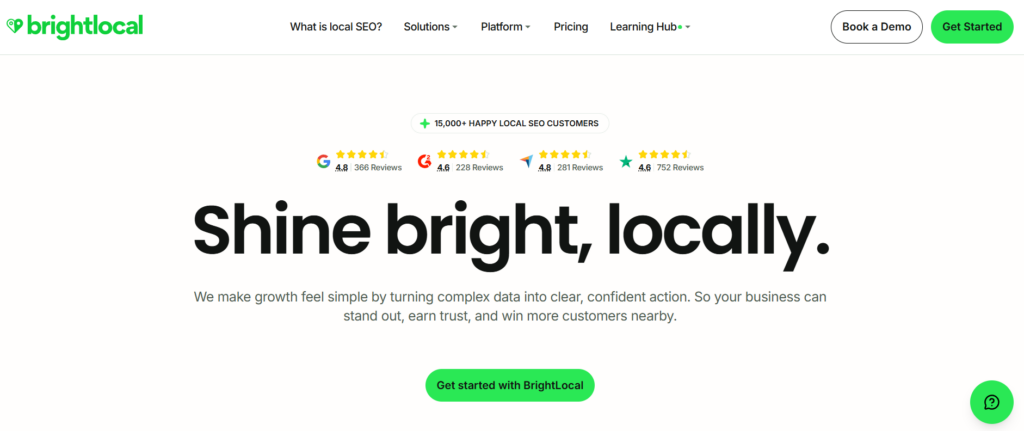
BrightLocal uses two listings services. Citation Builder creates or corrects listings through manual submissions. Active Sync keeps core profiles updated on Google Business Profile, Facebook, Bing, Apple Maps, and Yelp in the United States and Canada. This split suits businesses that want permanent citation work plus ongoing control of their busiest profiles.
The Manage plan starts at $40 per month and includes local search tracking, citation tools, and Active Sync access. Citation Builder is charged separately, starting at $3.20 per submitted site or as low as $2 with bulk credits. BrightLocal says manually created citations remain with the business after the work is complete.
Practical example: A consultant can audit a plumber, order submissions to missing trade directories, track map rankings, and protect the main profiles from unwanted edits.
Consider before buying: Active Sync covers fewer platforms than broad distribution products. Teams that need automatic syncing across many countries should compare the exact BrightLocal publisher list with enterprise alternatives.
4. Uberall
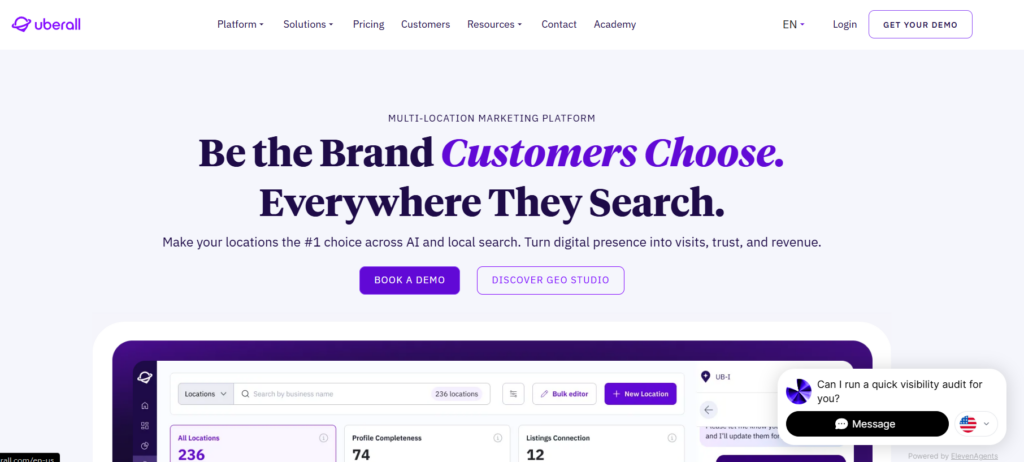
Uberall focuses on multi-location brands that need centralized listing control, reviews, social publishing, and local performance reporting. Its Listings Management product supports more than 150 directories, including Google, Apple Maps, Yelp, Bing, and services used by AI search systems. The platform includes bulk management, duplicate suppression, monitoring for unauthorized changes, and role-based controls for corporate and local teams.
Pricing is quote-based. Uberall packages listings with optional review, social, analytics, and collaboration modules. This setup suits companies that want one vendor for several local marketing tasks, though it makes fast price comparison difficult.
Practical example: A hotel group operating in several countries can keep addresses, amenities, photos, and seasonal hours consistent while regional teams manage approved local content.
Consider before buying: Request a country-level publisher list, onboarding fees, integration costs, minimum location commitments, and service terms. A global network total does not mean every directory accepts every category or data field.
5. Semrush Local
Semrush Local fits marketers who already use Semrush and want listings in the same account. Local Pro distributes business information to more than 70 directories and includes duplicate management, user-suggestion controls, an API, review monitoring, Google Business Profile tools, and map-grid rank tracking. Directory availability depends on country and business category.
Semrush sells Local separately or with another subscription. Local Base costs $30 per location each month, but full Listing Management sits in Local Pro at $60 per location. Pro also includes review generation, alerts, competitor review reports, bulk Google Business Profile editing, and more map-rank credits.
Practical example: An SEO team managing 12 clinics can distribute location data, watch map rankings by neighborhood, monitor reviews, and compare nearby competitors in one account.
Consider before buying: Per-location costs can climb for large brands. Check whether you need the full Semrush SEO suite or only Local, and whether its directories match each target country.
6. Birdeye

Birdeye combines listing accuracy with reviews, messaging, social media, and customer experience tools. Birdeye Listings manages business information across more than 100 sites in several countries and industries. Destinations include Google, Facebook, Bing, Nextdoor, Healthgrades, Avvo, and Tripadvisor. The platform updates listings from one business profile and reports on traffic, calls, profile activity, and search performance.
Birdeye does not publish a standard starting rate on its main pricing page. Pricing depends on location count and the products deployed. This model fits multi-location companies that want listings and reputation tools together, but buyers need a sales call to compare total costs.
Practical example: A dental group can correct directory data, monitor reviews, respond from a shared dashboard, and track calls or website visits generated by profiles.
Consider before buying: Birdeye may be more than a business needs for basic citation distribution. Ask for separate pricing for listings, reviews, messaging, implementation, and contract length.
Which Local Listings Management Tool Should You Choose?
- Choose Synup for white-label agency delivery and multi-client management.
- Choose Yext for a broad direct publisher network.
- Choose BrightLocal for audits, manual citation work, and a lower entry price.
- Choose Uberall for enterprise location teams working across countries.
- Choose Semrush Local when local work needs to sit beside other SEO tools.
- Choose Birdeye when listings are part of a review and messaging program.
Give two or three finalists the same location data, countries, and required directories. Compare the proposal, onboarding, update speed, reporting, and cancellation rules.
Questions to Ask Before Signing a Contract
Which Directories Are Supported in My Countries?
Ask for a live publisher list by country, not a global total. Coverage can differ by market and business category.
Are Updates Direct or Sent Through Aggregators?
Direct API connections can publish faster on supported sites. Aggregators can provide broader distribution. Ask how each priority publisher receives data.
Can the Tool Remove Duplicate Listings?
Confirm whether duplicate suppression is automated, handled by support, or left to your team.
What Happens When the Subscription Ends?
Ask whether listings remain live, revert to earlier data, lose extra content, or stop receiving protection against third-party edits.
How Does Pricing Change as Locations Grow?
Request a three-year estimate that includes onboarding, APIs, users, countries, review tools, reporting, and support.
Can Local Managers Edit Profiles?
Check whether local staff can suggest changes while a central team controls approval and publishing.
Frequently Asked Questions
What Is Local Listings Management Software?
It lets a business update its name, address, phone number, hours, categories, services, photos, and other location data across multiple platforms from one dashboard. Many tools also find duplicates, monitor user edits, track performance, and connect with review tools.
What Is the Best Local Listings Management Tool for Agencies?
Synup is the strongest overall option here for agencies because it offers white-label dashboards, client accounts, bulk controls, APIs, reporting, and related agency operations. BrightLocal suits consultants and smaller agencies focused on audits, citation work, and rank tracking.
What Is the Best Option for One Location?
BrightLocal or a lower Yext PowerListings plan may suit a single-location business. BrightLocal offers a lower monthly entry point and pay-as-you-go citation building. The better choice depends on the directories that require ongoing sync.
Do Listings Tools Improve Google Rankings?
No vendor can guarantee better rankings. Accurate profiles help search engines understand a business, but local results also depend on relevance, distance, prominence, reviews, website quality, categories, and competition.
Are Free Tools Enough?
Google Business Profile, Apple Business Connect, Bing Places, and many directories allow direct updates at no cost. Manual work can suit one or two locations. Paid software becomes useful for bulk updates, duplicate detection, monitoring, approvals, and reporting.
Conclusion
Synup takes first place because it combines white-label delivery, bulk listings work, client management, reporting, and public pricing for agencies. Yext offers the largest stated publisher network in this group. Uberall and Birdeye suit larger brands that want listings connected to other local marketing functions. BrightLocal gives smaller teams flexible citation options, while Semrush Local fits marketers who want local work inside an established SEO platform.
Test each finalist with real location data. Confirm the publishers that matter, every fee, cancellation terms, and how quickly changes reach Google, Apple Maps, Bing, Yelp, and industry directories.